

Within the last year or so, I’ve gone from writing every line of code in our applications to writing basically none. I almost never have to write or even manually edit code anymore. I don’t miss it, as the process of coding wasn’t what I found enjoyable.
Instead, I love seeing something come to life that I created out of nothing. As I handed coding off to AI, my focus shifted to creating systems and workflows to keep track of things. The speed at which I could build applications created a new bottleneck: trying to keep track of all the different features and bug fixes being executed at the same time, not only across a single project but across many.
Over time, I’ve made huge strides in this area, most recently with the creation of RalphBlaster. Apparently, I’m not alone in seeing the value here, because when I posted a video of it a couple of weeks ago without thinking too much about it, it went viral and has close to 300,000 views across a couple of Twitter posts.
As product development execution has become so fast, I’ve been able to work on multiple products and shift energy towards creating tools to help our marketing and admin processes as well. I’ve been so excited to be able to put some of my time into marketing and create systems to help Alex. It feels like a competitive advantage, at least for now.
When Clawdbot, now (Moltbot), was released recently, I started experimenting with it. I found some incredible ways that it really boosted our productivity. But what’s interesting is that it’s a boost in productivity and also gives us incredibly valuable insights that we didn’t previously take the time to get or were too time-consuming.
For example, I had already built an AI system that could monitor certain subreddits and alert us in Slack when certain posts appeared that it thought would be valuable for us to engage with. It was a decent start but needed fine-tuning. When CloudBot came out, I gave it the job. It analyzed all our products simply by pointing it to the wildfront.co website. It learned about what they do and determined certain subreddits where there might be relevant content for each product. Now, several times a day, it looks at posts in those subreddits and alerts us in Slack about high-value posts for us to engage with. This is already getting significantly better results than what I had built before.
What’s better is that my bot knows a lot about me already, so it’s able to write comments much more in my style and from my point of view, knowing my beliefs and history. Again, this was doable before, but CloudBot makes it significantly easier to implement. (We do not automate posting comments, but we do get a head start with these drafts).
Another thing that’s proving incredibly valuable is for one of our products, viewexport.com. It’s a fairly high-ticket price starting at $499 a month. When someone signs up for a trial, it sends us a notification in our sales channel in Slack with their email and the plan they signed up for.
Now, this notification is tagged in my bot, which then profiles the person by looking at their email. Usually, these email addresses have the business domain, so it’s able to extract information from that and the name they entered and find their LinkedIn profile. It analyzes their LinkedIn profile, tells us all about the person, their title, and their role, and does the same for the company, and determines why it thinks they need our product.
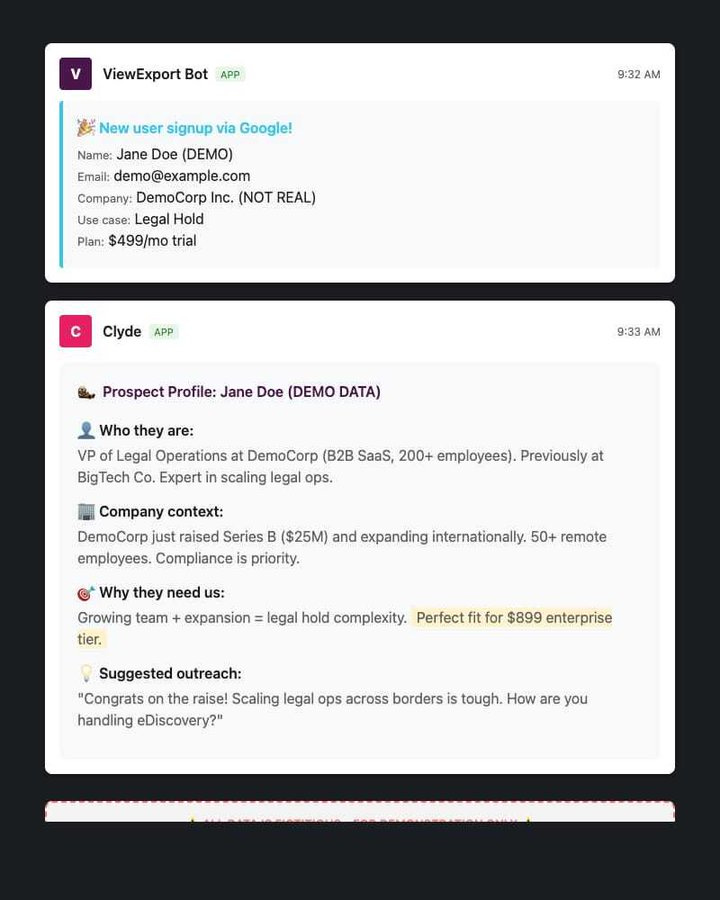
The bot also can look at all our existing customers and find patterns across their roles and company sizes and types.
I then asked my bot how we might create good outbound campaigns. It suggested something brilliant: finding job postings mentioning certain keywords related to our tool like eDiscovery and Slack. It finds these job listings, then finds the hiring manager’s LinkedIn profile and information about them. It analyzes their profile and suggests things we have in common along with drafting a LinkedIn connection request message.
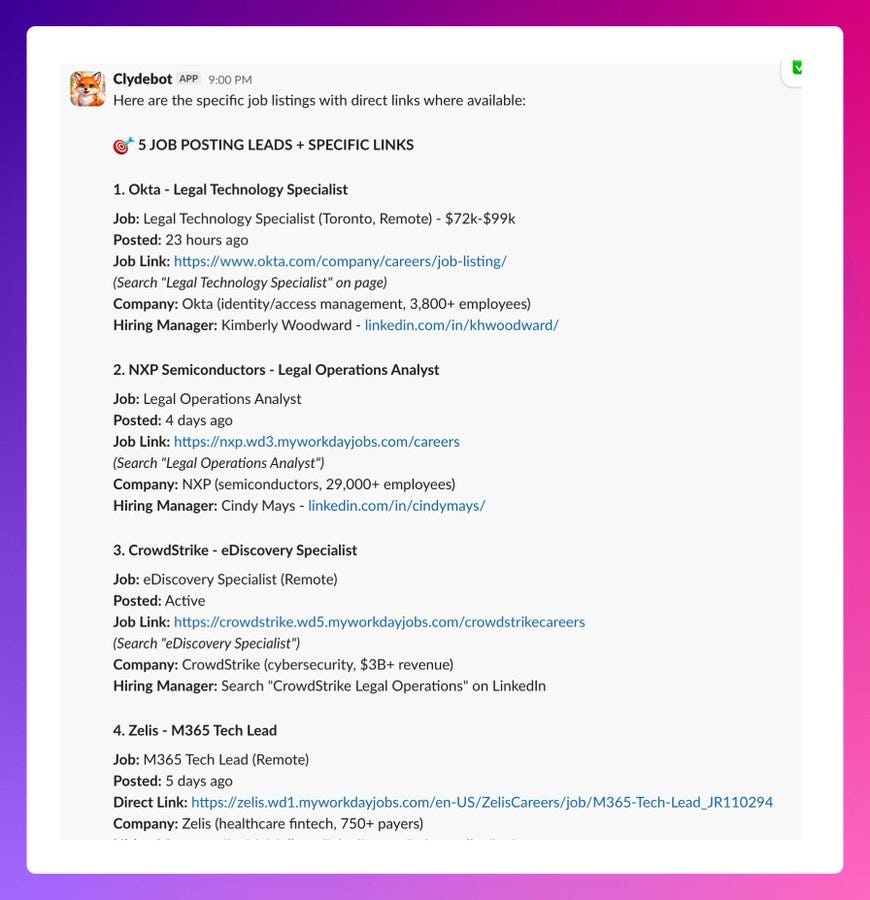
We don’t need to do this kind of outbound at scale, nor do we want it fully automated. We like to ensure that personal touch here. So sending 3-5 of these, each, per day, sounds like a worthwhile as an experiment.
It’s been fun watching this migration of AI taking over coding tasks and now finding creative ways to help with our marketing and systems. The key is not expecting AI to do everything but recognizing what it can do for us now versus what we wish it could do or even what we can’t otherwise do.
I highly recommend experimenting if you’re at all technical or patient with this stuff. It’s not going to perform miracles out of the box but with some creativity and experimenting, you’ll find incredible value from it.
Let’s continue this discussion in the chat.
Have a great weekend,
-Mac